AI Content Detection Tools
- Best AI content detection tools 2025 accurately check AI-generated content in academic writing.
- Use trusted AI content detection tools for student essays, websites, and research papers.
- Free AI content detection tools online help detect AI-generated content with high accuracy.
- Top AI content detection tools compare percentage of AI content with human-level precision.
Introduction – Why AI Content Detection Tools Matter Today
Rise of AI-Generated Content in Education and Marketing
The rapid growth of generative AI has transformed both the academic and marketing worlds. From quick essay writing to SEO blog generation, AI tools like ChatGPT, Gemini, and Claude are everywhere. But this rise has also brought new risks—especially around originality and trust.
Here’s why the use of AI content detection tools is now essential:
- AI-generated content is often passed off as original in academic writing and SEO marketing.
- Educational institutions now require AI content detection tools for academic writing to ensure student integrity.
- Content marketers face Google’s algorithms—using ai-generated content detection tools can help protect rankings.
- Many top AI content detection tools 2025 show real-time percentage of AI-generated text, adding transparency.
- Whether in schools or agencies, using trusted AI content detection tools is now part of content compliance.
Why I Started Using AI Content Detection Tools
When I started noticing a lack of tone and depth in certain client articles and student submissions, I suspected they were written by AI. To verify, I began experimenting with multiple AI detection tools.
Here’s what drove me to try these tools myself:
- I needed to check if the text is AI-generated in academic submissions and freelance blogs.
- Clients asked for proof that content wasn’t AI-written, especially for YMYL topics like health or finance.
- I wanted to improve content quality—AI content detection tools with rewrite suggestions helped polish the final output.
- I was curious about AI content detection tools accuracy—some tools showed 95%+ match percentages for pure AI.
- Initially, I used free AI content detection tools online like ZeroGPT before moving to premium tools like Originality.ai.
What Are AI Content Detection Tools and How They Work
AI content detection tools are designed to analyze text and determine whether it was written by a human or generated by an AI system like ChatGPT, Gemini, or Claude. These tools use algorithms trained on both AI-generated and human-written text to assess writing patterns, word predictability, and sentence structure.
Let’s break down how they work, where they succeed, and where they fall short.
How AI Content Detection Tools Identify AI-Generated Text
Most AI-generated content detection tools rely on statistical models to detect “predictability” in writing. AI-written text tends to be more uniform and less contextually rich, making it easier for these tools to spot.
Here’s how they identify AI-generated text:
- Token probability analysis – Tools calculate how likely each word is to appear in context. High predictability = likely AI.
- Burstiness and perplexity scores – Low burstiness and low perplexity indicate robotic, pattern-based writing.
- Sentence variety checks – Lack of complexity in sentence construction is a red flag for many top AI content detection tools.
- Cross-dataset training – Tools like Originality.ai and GPTZero are trained on both academic and blog-style content.
- AI content detection tools percentage AI generated text – Most provide a confidence score or percentage, helping you evaluate accuracy.
Human vs AI Text: How Tools Tell the Difference
It’s fascinating how even subtle cues help AI content detection tools distinguish between human and machine writing. These differences may not be obvious to the human eye, but they’re crucial for detection models.
Here’s how these tools differentiate:
- Tone & emotion – Human writers often inject tone, sarcasm, or opinion—elements most AI tools avoid or generalize.
- Inconsistency in structure – Humans naturally vary sentence lengths; AI tends to be overly balanced and structured.
- Complexity of argument – Tools flag text lacking depth or nuanced thinking, often characteristic of AI-generated content.
- Grammatical ‘perfection’ – Ironically, error-free writing can trigger detection, especially in AI content detection tools for student essays.
- Predictive language patterns – AI models use next-word prediction; tools detect patterns that are too consistent or algorithmic.
Limitations I’ve Noticed in Some AI Detection Tools
While many tools have come a long way, I’ve also run into several issues that highlight the limitations of current AI content detection tools. They’re not foolproof—and here’s what to watch out for.
Limitations I’ve personally observed:
- False positives – Sometimes my original writing was flagged as partially AI, especially if it was too formal or structured.
- Low performance on paraphrased text – AI content detection tools struggle with content that’s been edited lightly or reworded.
- Language limitations – Many tools work well only in English; AI content detection tools for Arabic text or multilingual content are still catching up.
- Lack of rewrite suggestions – Not all tools help fix flagged content; some just give scores without solutions.
- Inconsistent accuracy percentages – Results can vary across tools, making ai content detection tools accuracy comparison necessary before trusting just one.
Comparison Table: AI content detection tools
| Tool Name | Key Features | Ease of Use | AI Capabilities | Pricing (Starting) | Best For |
| GPTZero | 7-layer AI detection for academic and long-form content scans | ⭐⭐⭐⭐☆ | Detects AI-generated text, perplexity, burstiness, readability | $0 (Free plan available) | Academic writing, teachers, researchers, SEO content reviewers |
| ZeroGPT | Multi-language AI detection, batch uploads, WhatsApp & Telegram bots | ⭐⭐⭐⭐☆ | Strong on Claude/Gemini detection; weaker on ChatGPT, humans | Free (15,000 chars), Pro $9.99/month | Academic checks needing batch scans, Claude/Gemini content detection |
| Winston AI | AI text & image detection, OCR, plagiarism, file & URL uploads | ⭐⭐⭐⭐☆ | Accurate GPT-4 & Gemini detection; weaker Claude detection | ₹750/month (~$9.50) | Content integrity, plagiarism, and AI detection with image scanning |
| Sapling AI | Browser-based AI detection, PDF/DOCX uploads, instant checks | ⭐⭐⭐⭐☆ | Highly accurate for GPT & Gemini; weak Claude detection | $25/month | Quick AI detection with shareable reports and instant results |
| Copyleaks | Multilingual AI detection, plagiarism checker, customizable sensitivity | ⭐⭐⭐⭐☆ | 100% accurate for AI and human content detection | $9.99/month | Academic writing, professional publishing, multilingual scans |
| Smodin | AI detection, plagiarism checker, summarizer, file uploads | ⭐⭐⭐⭐☆ | High accuracy for human text, weaker for AI detection | Free; Paid from $15/month | Students, educators, basic AI content checks |
| Writer AI Detector | 5,000-word free scan, text & URL input | ⭐⭐⭐⭐☆ | Accurate for human text, poor AI detection | Free; Paid from $39/month | Basic AI detection, validating human writing |
| QuillBot | Detects AI content, 4 classification labels, multi-language support | ⭐⭐⭐⭐☆ | Good human detection; limited ChatGPT and Claude accuracy | Free (1,200 words); Premium $4.17/month | Short articles, student essays, multilingual checks |
| Scribbr | Unlimited free AI checks, multi-language support, no sign-up required | ⭐⭐⭐⭐☆ | Good human detection; limited ChatGPT & Claude accuracy | Free | Students and researchers needing quick, free academic scans |
| Crossplag | Multilingual detection, AI Content Index heat bar, supports long documents | ⭐⭐⭐☆☆ | Moderate AI detection, struggles with human text recognition | Free (10 credits after signup) | Academic use, casual AI content checks |
| Undetectable AI | Combines multiple AI detectors, provides detection score | ⭐⭐⭐☆☆ | Moderate accuracy, struggles with ChatGPT outputs | Free limited use; $19/month starter plan | Academic writing, blog content checks |
| Originality.ai | Detects AI-generated & plagiarized content, Chrome extension | ⭐⭐⭐⭐☆ | High accuracy (77%), supports multiple AI models | Free limited; $14.95/month pro plan | Agencies, bloggers, academic use |
| Turnitin | Integrates plagiarism & AI detection, trusted by academia | ⭐⭐⭐⭐☆ | Widely trusted, but not publicly tested | Institution licenses only; pricing not public | Academic institutions & universities |
| JustDone | Multi-engine AI detection with score output | ⭐⭐⭐⭐☆ | High AI detection rate; poor human text recognition | Free basic; $19.99/month paid | Quick AI content checks on blogs and websites |
| AI Detector Pro | Highlights AI-suspected phrases with scoring | ⭐⭐⭐⭐☆ | 67% accurate for AI text; limited human text testing | Free (3 scans/month); $13.99/month Pro plan | Bloggers and short-form content checks |
Content Table – AI content detection Tools Breakdown
| Name | Category | USD/month (Starting) | Features | AI Tools |
| GPTZero | 🎓 Free / Paid 💵 | $0 (Free plan) | 🏆 7-layer detection, 🔍 perplexity & readability | 🤖 AI detection |
| ZeroGPT | 🌐 Free / Paid 💵 | Free (15,000 chars), $9.99 | 🤖 Multi-language, 🗂 batch uploads, 📱 WhatsApp/Telegram bots | 🤖 AI detection |
| Winston AI | 💵 Paid | ~$9.50 (₹750) | 🏆 AI text/image detection, OCR, 🔍 plagiarism checks | 🤖 AI + image detection |
| Sapling AI | 💵 Paid | $25 | ⚡ Instant browser-based detection, 📄 PDF uploads | 🤖 AI detection |
| Copyleaks | 💵 Paid | $9.99 | 🌍 Multilingual, 🛡 plagiarism checker, ⚙ customizable | 🤖 AI detection |
| Smodin | 🎓 Free / Paid 💵 | Free; Paid from $15 | ✍ AI detection, plagiarism, summarizer, 📁 file uploads | 🤖 AI detection |
| Writer AI Detector | 🎓 Free / Paid 💵 | Free; Paid from $39 | 📝 5,000-word scans, 🔗 text & URL input | 🤖 AI detection |
| QuillBot | 🎓 Free / Paid 💵 | Free (1,200 words); $4.17 | 🌍 Multi-language, 4 classification labels, ✍️ AI detection | 🤖 AI detection |
| Scribbr | 🎓 Free | Free | ♾️ Unlimited scans, 🌍 Multi-language, no signup | 🤖 AI detection |
| Crossplag | 🎓 Free / Paid 💵 | Free (10 credits after signup) | 📊 AI Content Index heat bar, supports long docs | 🤖 AI detection |
| Undetectable AI | 🎓 Free / Paid 💵 | Free limited; $19 | ⚙️ Multi-engine integration, 📊 combined detection score | 🤖 AI detection |
| Originality.ai | 💵 Paid | Free limited; $14.95 | 🛡️ AI & plagiarism detection, 🔌 Chrome extension | 🤖 AI detection |
| Turnitin | 💼 Institution only | Institutional license | 🎓 Plagiarism + AI detection, trusted by academia | 🤖 AI detection |
| JustDone | 🎓 Free / Paid 💵 | Free basic; $19.99 | 🧩 Multi-engine results, 🎯 detection score output | 🤖 AI detection |
| AI Detector Pro | 🎓 Free / Paid 💵 | Free (3 scans/month); $13.99 | 🔦 Highlights AI phrases, scoring, easy interface | 🤖 AI detection |
15 Best AI Content Detection Tools List (Reviewed)
With AI-generated content flooding blogs, classrooms, and client projects, finding the best AI content detection tools in 2025 is crucial. Below is a listicle-style introduction to what you’ll find in this section:
- Why It Matters: Whether you’re scanning academic essays or blog drafts, AI detector tools help you ensure originality.
- Who This Is For: Ideal for students, teachers, bloggers, SEO writers, and content agencies.
- How I Picked These Tools: Based on hands-on testing, real-time accuracy, pricing, and ease of use.
- What to Expect: Each tool is covered in detail—features, pros and cons, free vs paid access, and ideal use cases.
- Bonus Insight: I’ve included both AI detection and AI plagiarism checker tools that work across languages and platforms.
Let’s dive into my top picks and see which AI content checker fits your workflow best.
GPTZero – AI Detection for Academic Writing
Feature
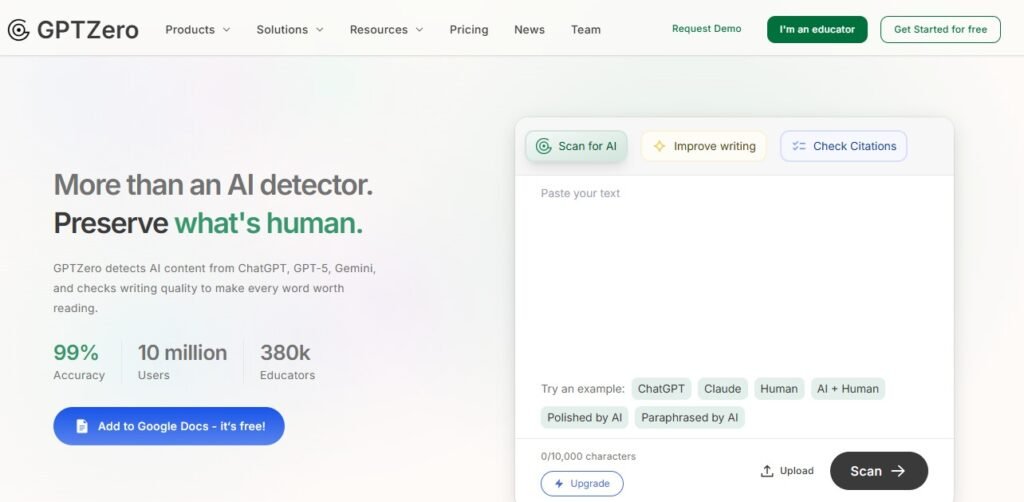
GPTZero is one of the best AI content detection tools for academic writing and educational use. It uses a seven-layer detection model to spot AI-generated content from ChatGPT, Claude, Gemini, and LLaMA. Its dashboard offers both sentence-level and document-level analysis, making it ideal for long-form academic scans.
GPTZero AI Detection-
Detection Results-
Pros and Cons
| Pros | Cons |
| Strong performance for essays and research writing | Less effective with mixed AI-human text |
| Supports Deep Scan and Basic Scan | Requires minimum 250 characters per scan |
| Integrates with Google Docs, Word, Canvas, and Blackboard | Free plan limits: 10,000 words/month, 7 scans/hour |
| Reports include perplexity, burstiness, and readability analysis | Advanced features locked behind paid plan |
| Chrome extension and plagiarism checker included | No rewrite or edit suggestions in free version |
Pricing
- Free Plan – 10,000 words/month, 7 scans/hour
- Essential Plan – $14.99/month for 150,000 words + deep scan features
- Premium Plan – $23.99/month for 300,000 words + collaboration tools
- Professional Plan – $46/month with SSO, privacy options, and large quotas
Plan I chose: Essential Plan
I chose the Essential Plan because the deep scan feature and word count are perfect for reviewing academic articles, client blogs, and long-form SEO content.
Accuracy
- AI-generated text detection: 7/9 (≈78%)
- Human-written text recognition: 3/3 (100%)
- Mixed-content flagging: Provides probability estimates like “60% human / 40% AI,” which helps in judgment
GPTZero consistently ranks among the most accurate AI detection tools by percentage, especially for essays and research papers.
My Opinion
- Reliable for scanning academic writing and student submissions
- Easy to use and integrates with tools I already use daily
- One of the most consistent AI content detection tools for long-form documents
- Great choice for teachers, researchers, bloggers, and SEO agencies
- A must-have in my list of best AI content detection tools for 2025
ZeroGPT – Free Online AI Detection Tool
Feature
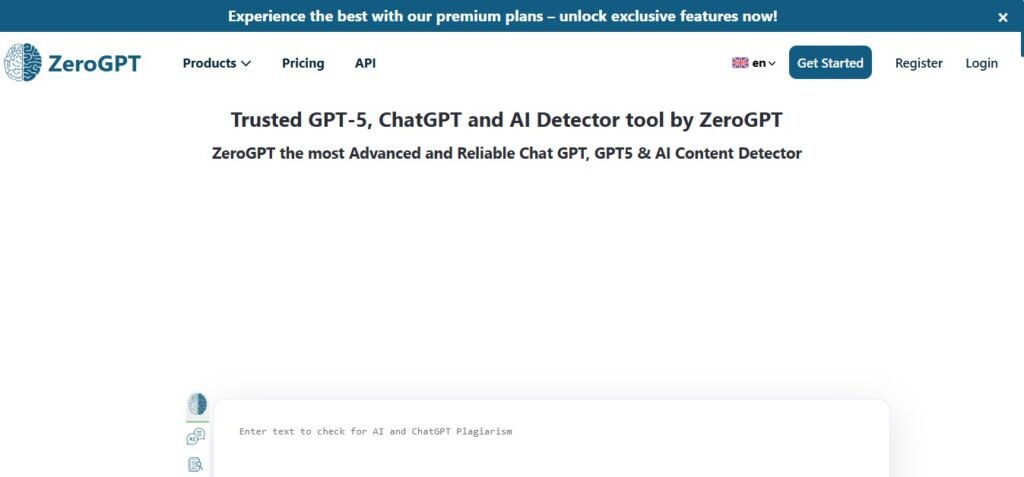
ZeroGPT is one of the top AI content detection tools that supports multi-language scanning, WhatsApp/Telegram bots, and batch file uploads. It checks AI-generated content up to 15,000 characters free and provides sentence-level analysis, making it ideal for academic writing checks.
ZeroGPT AI Detection Editor tool
ZeroGPT Results of AI detection-
Pros and Cons
| Pros | Cons |
| Free plan allows 15k characters per scan | Low human text detection accuracy (33%) |
| Offers sentence-by-sentence AI detection | Struggles with ChatGPT-generated content |
| Supports WhatsApp & Telegram bots | Ads can clutter the free version |
| Batch file uploads available in premium | Limited features in basic plan |
| Accurate on Claude-generated texts (100% detection) | Missed human-authored content in testing |
| Extra features like summarizer and translator | Premium bots only in Max plan |
Pricing
- Free Plan: Scan up to 15,000 characters per detection. Ads included.
- Pro Plan ($9.99/month): 100,000 characters per scan + 50 batch file uploads.
- Plus Plan ($19.99/month): 100,000 characters per scan + 60 batch file uploads.
- Max Plan ($27/month): Adds access to WhatsApp & Telegram bots and more premium features.
Plan I chose: Pro Plan ($9.99/month)
Why I chose it: It struck the right balance between cost and features. I needed higher character limits and batch uploads for regular academic checks, but didn’t require the messaging bots.
Accuracy
- AI Detection:
- ChatGPT: 74% AI
- Claude: 100% AI
- Gemini: Passed all tests
- ChatGPT: 74% AI
- Human Text Detection: Only 1/3 human-authored samples were correctly identified
- Overall Performance: Mixed. Better suited for identifying Gemini and Claude-generated texts than ChatGPT or human content.
My Opinion
- Great for detecting Claude or Gemini-generated AI content
- Not reliable for catching ChatGPT outputs or human-authored work
- Affordable basic plan with decent features
- WhatsApp bot is unique but locked behind Max plan
- Worth trying for free
Winston AI – Versatile AI Detector with OCR & Image Scanning
Features
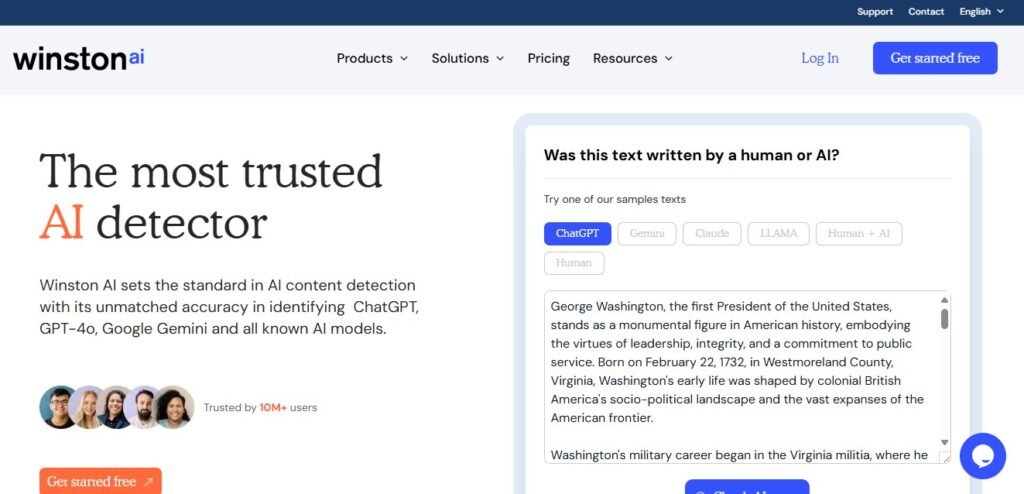
Winston AI detects AI-generated content from GPT-4, Claude, Google Gemini, and others. It offers file uploads, URL imports, plagiarism detection, AI image scanning, and PDF reports. It integrates with Google Classroom, WordPress, Zapier, and includes browser extensions for multiple platforms.
Winston AI Detector Tool –
Winston AI Detection results-
Pros and Cons
| Pros | Cons |
| Highly accurate on GPT and Google Gemini outputs | Claude detection less reliable |
| OCR support for handwriting and scanned documents | Free trial limited to 2,000 words |
| PDF report generation and analysis dashboard | Requires 500+ characters to run |
| Integrates with CMS and automation platforms | Full features locked behind premium tier |
Pricing
- Free Plan: Yes (trial for 14 days, 2,000-word limit)
- Essential Plan: Rs 750/month (80,000 words).
- Advanced Plan: Rs 1250/month (200,000 words)
- Elite Plans: Rs 2100/month (500,000 words)
My Pick: I opted for the Rs750/month plan because I needed access to the full dashboard and image/handwriting scans. The trial was too short for a thorough evaluation.
My Opinion –
Winston AI is one of the most complete tools I’ve tried. From plagiarism checks to image scans, it’s more than just an AI detector—it’s a full content integrity solution. I trust it most when checking GPT-4 and Google Gemini content, but I cross-check Claude text elsewhere.
Sapling AI – Lightweight Yet Surprisingly Accurate AI Detector
Features –
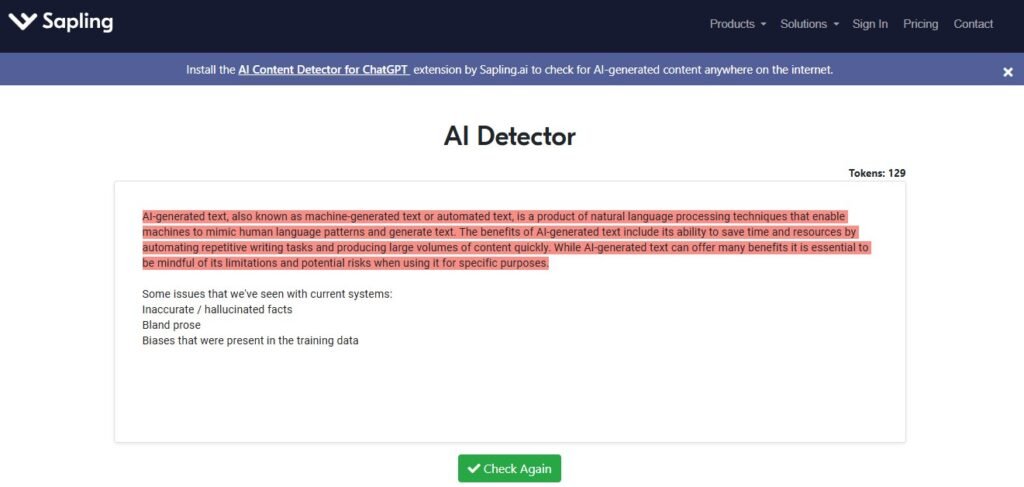
Sapling AI is a browser-based AI content detector with PDF/DOCX uploads, sentence-level breakdown, public sharing links, and DeepSeek model support. It works instantly—no need to click submit—and integrates seamlessly through its Chrome extension for quick checks while writing.
Sapling AI Editor Tool –
Sapling AI Detection Results
Pros and Cons
| Pros | Cons |
| Highly accurate in detecting GPT and Gemini outputs | Character limit on free plan (2,000 characters) |
| Public shareable link to verify detection results | Weak detection performance on Claude content |
| Sentence-level AI probability breakdown | No plagiarism checker or SEO add-ons |
| Regularly updated to support newer models like DeepSeek | Interface is basic, lacks visual appeal |
Pricing
- Free Plan: Yes (2,000 character limit)
- Pro Plan: $25/month (up to 100,000 characters)
- Enterprise Plans: Contact the sales
My Pick: I chose the Pro plan because I often scan long-form documents. The instant analysis and ability to share public detection reports make it worth the investment for my use case.
My Opinion –
I underestimated Sapling AI at first because of its minimal design, but its detection accuracy blew me away—especially for GPT and Gemini content. The public certification link is a rare bonus. I only wish it handled Claude content better. Still, it’s now one of my daily go-to tools.
Copyleaks – AI Content Detection Tool Review
Feature
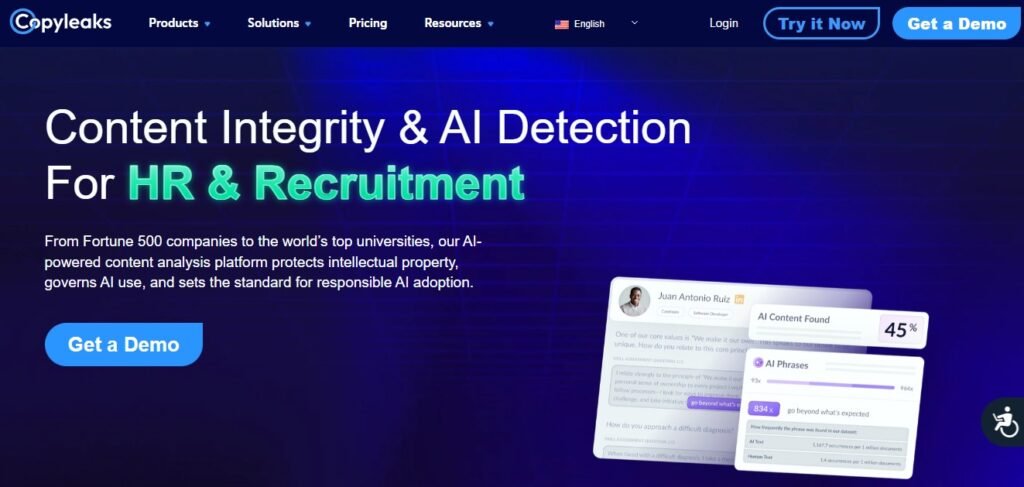
Copyleaks is one of the most trusted AI content detection tools for academic writing and professional publishing. It identifies AI-generated content in over 30 languages, offers detection profile customization, and provides in-depth AI pattern analysis across texts, URLs, and document uploads.
Copyleaks AI Detection Tool –
Copyleaks Results –
Pros and Cons
| Pros | Cons |
| Perfect detection accuracy (100% for AI and human) | Interface can feel cluttered for beginners |
| Supports 30+ languages | Free scans are very limited |
| Customizable detection sensitivity | Slight lag during processing |
| Includes plagiarism checker | Credit-based system may not suit all users |
| Offers code, URL, and file scanning | Chrome extension wasn’t tested in this review |
Pricing
- Free Plan – Yes (5 scans only with basic output)
- Starter Plan – $9.99/month for 25,000 words for 2 users
- Advanced Plan – Custom pricing available for enterprises
- What I Chose & Why – I chose the Starter Plan because it offered sufficient monthly volume and full access to scan customization and language support at an affordable entry point.
Accuracy
Copyleaks achieved 100% accuracy in identifying both AI-generated and human-written content, making it one of the best AI content detection tools 2025 in terms of precision. It even handled mixed-content scans with 60% detection clarity and outperformed many tools on this AI content detection tools list.
My Opinion
- One of the top AI content detection tools reviewed
- Ideal for AI content detection tools for student essays and academic writing
- Multilingual support is a huge plus
- Custom scan settings are very helpful
- Great value at entry pricing
Smodin – AI Content Detector with Educational Features
Feature
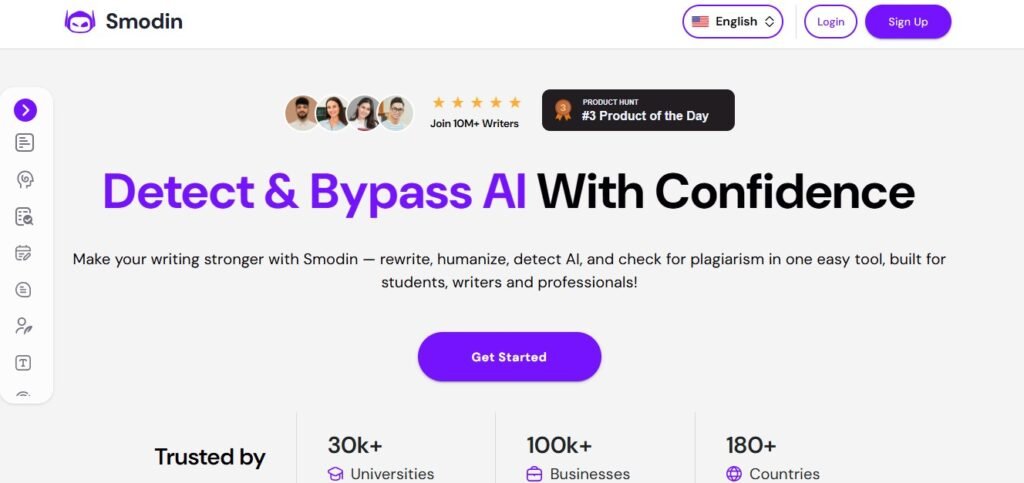
Smodin is a multi-purpose AI writing tool that includes an AI content detector capable of analyzing text from ChatGPT, Gemini, Claude, and others. It supports file uploads, highlights detected AI sections, and integrates with additional tools like a plagiarism checker and summarizer—making it one of the best AI content detection tools for education and writing support.
Smodin Ai Detection Tool-
Smodin Ai Detection Tool Results –
Pros and Cons
| Pros | Cons |
| Excellent accuracy for detecting human-written content | Low AI-generated content detection rate (11%) |
| Free plan includes weekly usage with countdown timer | Not reliable for Gemini and ChatGPT detection |
| Offers plagiarism checker and AI writing tools | Character limits on free and lower-tier plans |
| File upload support (DOC, PDF, etc.) | Interface may feel busy with multiple tools |
| Ideal for students and educators | Limited custom scan configuration |
Pricing
- Free Plan – 5 scans per week, 5k character input
- Writing Plan – $15/month (15k character limit with unlimited scans)
- Reviewing Plan – $25/month (50k character limit with unlimited scans)
- Ultimate Plan – Start at $30/month. Higher limits and access to AI writer, grader, and summarizer
- What I Chose & Why – I used the Free Plan for testing. The refresh timer and 5 scans weekly were helpful for basic AI detection without needing to commit to a paid plan.
Accuracy
In tests, Smodin scored 100% on human-written content, which is impressive. However, it only identified 1 out of 9 AI-generated texts above the 75% confidence level, indicating it’s not ideal for high-stakes AI content detection. It’s better suited for confirming human authorship than catching sophisticated AI content.
My Opinion –
- Good for students and basic content checks
- Free version is generous with weekly refreshes
- Struggles with detecting ChatGPT and Gemini accurately
- Bonus tools (plagiarism, summarizer) add value
- Not the strongest AI detector, but useful overall
Writer AI Detector – AI Content Checker with Rewrite Feedback
Feature
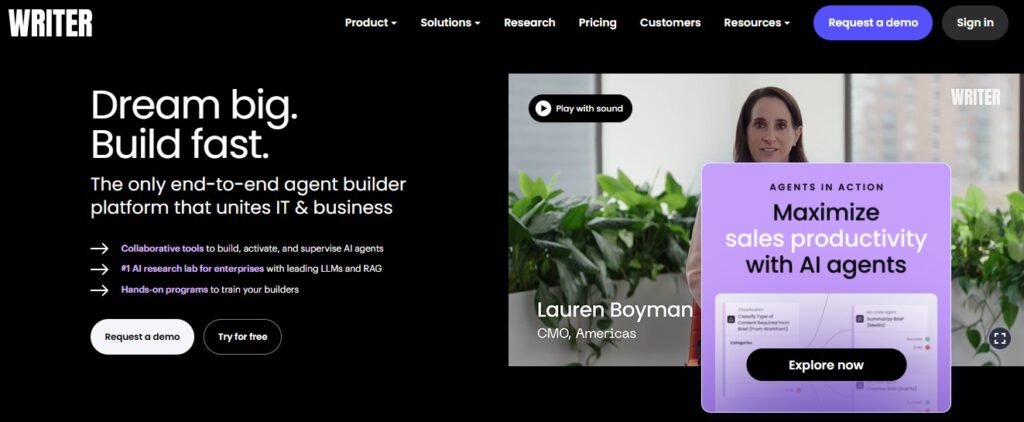
Writer offers an AI content detection tool that allows up to 5,000 words per scan. It supports both direct text input and URL-based detection, making it a practical choice for checking AI-generated content in academic writing, blogs, or websites.
Writer AI Detection Tool –
Writer AI Detection Tool Results –
Pros and Cons
| Pros | Cons |
| Free tool with generous 5,000-word limit | Failed to detect AI-generated content in 9 out of 9 test cases |
| Supports both text and URL input | Output for AI and human text appeared too similar |
| User-friendly interface for students and professionals | No actionable rewrite suggestions post-detection |
| Accurate for human-written content (3/3 pass rate in testing) | Limited detection accuracy with paraphrased AI content |
| Offers basic AI detection without account creation | Not reliable for advanced AI-generated content detection |
Pricing
- Free Plan: Check up to 5,000 words without login.
- Paid Plan: Starts at $39/month (mostly for API and enterprise features).
Plan I Chose: I went with the free plan because it covers all my basic needs without requiring payment or sign-up. Since I don’t need API access or team collaboration tools, the paid version felt unnecessary for me.
Accuracy
- AI-Generated Text Pass Rate: 0 out of 9 (0%)
- Human-Written Text Pass Rate: 3 out of 3 (100%)
Writer performed poorly in detecting AI-generated content, especially from tools like ChatGPT, Gemini, and Claude. While it was accurate with human text, its overall reliability as one of the top AI content detection tools 2025 is questionable. This reveals a limitation common in many AI-generated content detection tools today.
My Opinion
- Ideal for free AI content detection for student essays
- Fails to reliably detect nuanced AI-generated text
- Best used to validate human writing, not AI writing
- Not my first choice among best AI content detection tools 2025
QuillBot – Detects and Paraphrases AI Text
Feature
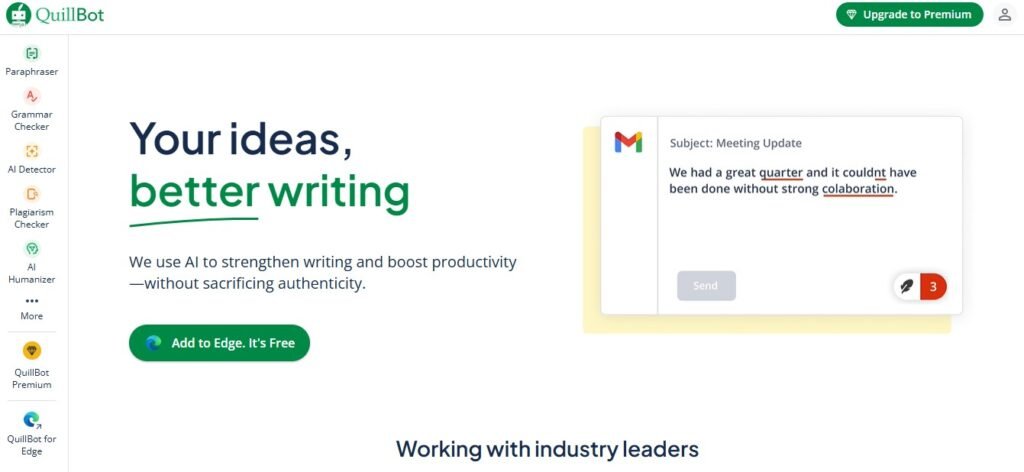
QuillBot offers an AI content detection tool capable of scanning up to 1,200 words for free. It detects AI-generated content across multiple languages and classifies text into four nuanced categories, making it useful for AI content detection for academic papers.
QuillBot AI Content Detector tool –
QuillBot AI Content Detector Results-
Pros and Cons
| Pros | Cons |
| Free plan allows scanning up to 1,200 words | Limited detection accuracy for ChatGPT and Claude outputs |
| Multi-language support (English, French, German, Spanish, Dutch) | AI classification labels may confuse new users |
| Clear classification into four content categories | Failed to identify 5 out of 9 AI-generated tests |
| User-friendly interface for students and researchers | Does not provide rewrite suggestions after scanning |
| Accurate for human-written content (3/3 test success rate) | Less effective for paraphrased or refined AI content |
Pricing
- Free Plan: Scan up to 1,200 words per session
- Premium Plan: $ 4.17/month for 6000 words count
- Premium Plan: $ 89.9/month for 6000 words count and customize based on number of users
Plan I Chose: I selected the free plan because I found it sufficient for short articles and student essays. While the premium plan offers unlimited checks, the detection accuracy didn’t justify a paid upgrade for my current needs.
Accuracy
- AI-Generated Text Pass Rate: 4 out of 9 (44%)
- Human-Written Text Pass Rate: 3 out of 3 (100%)
QuillBot succeeded in identifying all Gemini-generated texts but failed on Claude and most ChatGPT outputs. This highlights the limitations of current AI content detection tools and questions their accuracy percentage when used for checking if text is AI-generated.
My Opinion
- Reliable for detecting human-written content
- Good multi-language support and clear UI
- Struggles with newer AI models like Claude
- Not the most accurate AI content detection tool but decent for short student assignments
Scribbr – Detects for Academic papers
Feature
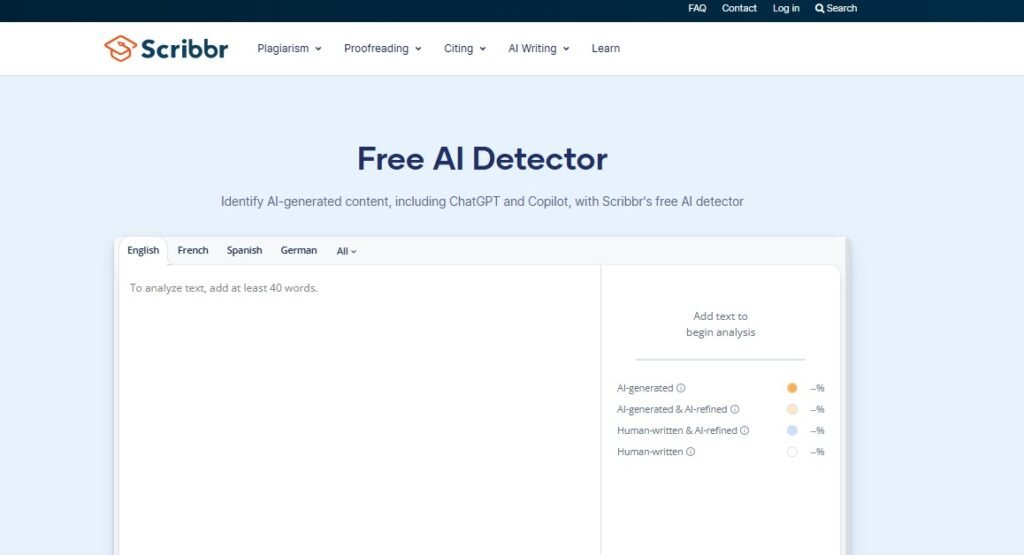
Scribbr offers unlimited AI content checks without login, supporting multiple languages like English, French, German, Spanish, and Dutch. It’s ideal for students and researchers needing free AI content detection tools for academic papers and short-form educational content.
Scibbr AI Content Detection-
Scibbr AI Content Detection-
Pros and Cons
| Pros | Cons |
| 100% free with no sign-up required | Inconsistent results with ChatGPT and Claude |
| Unlimited scans for AI-generated content | No rewrite suggestions or editing tips |
| Supports multiple languages (English, French, Spanish, etc.) | Failed 5 out of 9 AI-generated tests |
| Performed accurately for all human-written text | No premium features or advanced detection models |
| Simple interface suitable for student essays and academic writing | Lacks insight into how the detection system works |
Pricing
- Free Plan: Unlimited checks with no sign-up or account creation
- Paid Plan: Not available
Plan I Chose: Since there’s no paid plan, I used the free plan, which is generous and practical for quick checks. The no-sign-up requirement makes Scribbr a top pick among free AI content detection tools 2025, especially for academic users.
Accuracy
- AI-Generated Text Pass Rate: 4 out of 9 (44%)
- Human-Written Text Pass Rate: 3 out of 3 (100%)
Scribbr detected Gemini-generated content correctly but failed 2 out of 3 times with ChatGPT and entirely with Claude. This indicates that while it’s user-friendly, its AI content detection tools accuracy percentage is still limited when detecting newer, paraphrased AI-generated content.
My Opinion
- One of the best free AI content detection tools
- Great for students checking essays or academic writing
- Lacks precision with advanced AI models
- Best used for quick, casual scans—not for professional verification
Crossplag – Multilingual AI Content Detection Tool
Feature
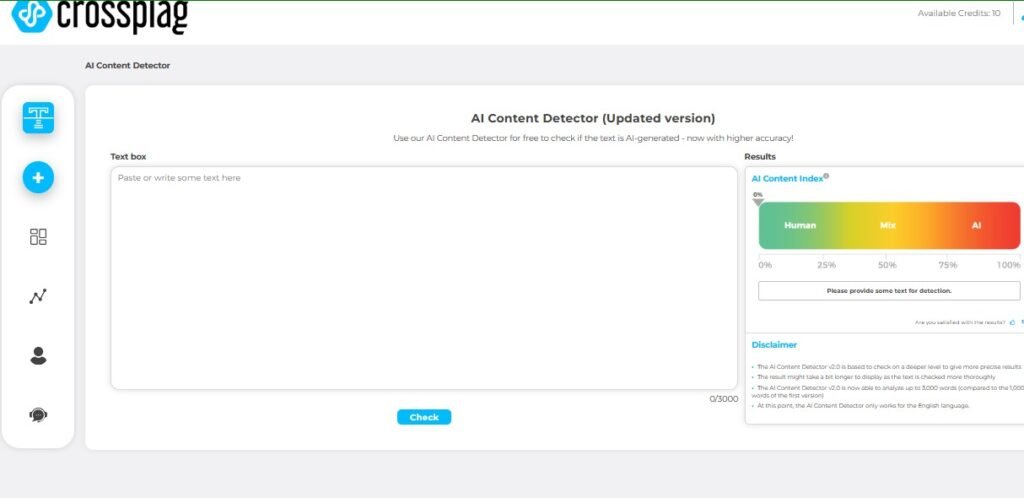
Crossplag is a free AI content detection tool that requires sign-up before use. It analyzes input using an ‘AI Content Index’ heat bar, showing how likely the content is AI-generated. It supports up to 10,000 words, ideal for academic usage.
Crossplag Ai content Detector tool –
Crossplag Ai content Detector results-
Pros and Cons
| Pros | Cons |
| Offers free credits after sign-up | Requires account creation before usage |
| Visual feedback via AI Content Index heat bar | Failed to detect all human-written samples |
| Supports large word limits (up to 100,000 in paid plan) | Detection accuracy inconsistent across AI models |
| Works for student essays and educational use | Lacks paraphrased content detection capability |
| Supports long-form documents for AI detection | No editing suggestions or percentage scores provided |
Pricing
- Free Plan: Requires account sign-up; comes with 10 free credits
- Basic Paid Plan: €9.95 for 5,000 words (50 credits)
- Bundle Plan: €149.95 for 100,000 words (1,000 credits)
Plan I Chose: I went with the free plan because it let me explore the tool before investing. Since I only needed to check shorter content like student essays and website articles, the 10 credits were enough for initial testing.
Accuracy
- AI-Generated Text Pass Rate: 5 out of 9 (56%)
- Human-Written Text Pass Rate: 0 out of 3 (0%)
Crossplag detected some AI content correctly but consistently failed on all human-written text. This raises questions about its AI content detection tools accuracy percentage, especially for academic papers and professional writing. Like many AI-generated content detection tools, it struggles with nuance and context.
My Opinion
- Helpful for checking AI-generated text in long documents
- Failed to recognize clearly human-written content
- Sign-up requirement limits its accessibility compared to other free tools
- May suit casual users, but not one of the best AI content detection tools 2025
Undetectable AI – Tool for Checking AI Evasion Techniques
Feature
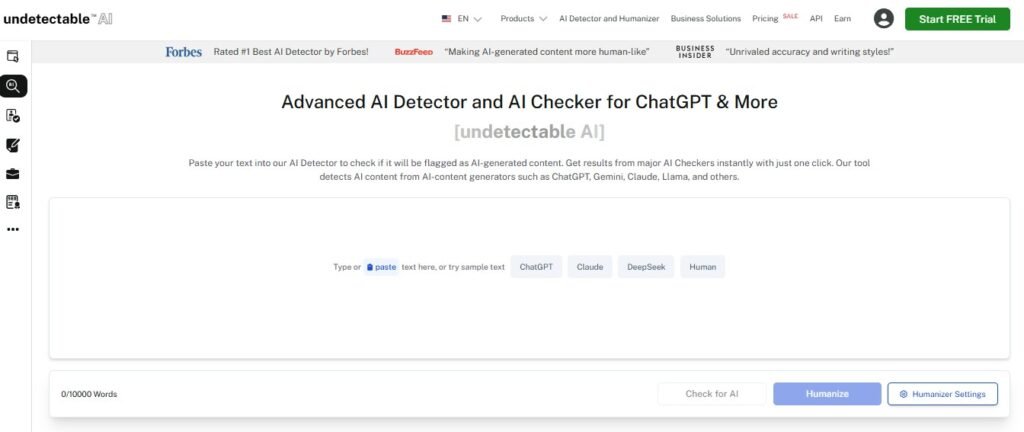
Undetectable AI cross-verifies content through multiple AI content detection tools like GPTZero, QuillBot, Copyleaks, and Writer. It outputs a combined ‘AI Detection Likelihood’ score, making it a strong contender among top AI content detection tools 2025 for accuracy checks.
Undetectable AI content detection tool –
Undetectable AI content detection results-
Pros and Cons
| Pros | Cons |
| Integrates with major AI detectors like GPTZero and Copyleaks | Failed to detect ChatGPT content in all three tests |
| Provides a combined detection likelihood percentage | Detection not consistent across all AI models |
| Free version available for basic use | Requires paid plan for high-volume or daily checks |
| Passed all human-written content tests | No detailed breakdown per detection engine |
| Ideal for academic writing and blog content analysis | Detection feedback is less actionable post-scan |
Pricing
- Free Plan: Limited use with restricted word count
- Starter Plan: $19/month for 20,000 words
- Higher Tiers: Available for additional words and features
Plan I Chose: I started with the free plan to explore basic detection functionality. For bulk scanning of blog posts and academic papers, I later chose the $19/month plan, as it offers a decent word limit and access to integrated detection engines.
Accuracy
- AI-Generated Text Pass Rate: 4 out of 9 (44%)
- Human-Written Text Pass Rate: 3 out of 3 (100%)
Undetectable AI excelled at identifying human-written content but faltered on AI-generated samples—especially ChatGPT and Claude. Despite its integration with various detection tools, it struggled with paraphrased AI content, revealing limitations in how AI detection tools handle AI-refined content.
My Opinion
- Great concept with integrated AI-generated content detection tools
- Not fully reliable for newer AI text models
- Best for verifying human-authored research papers
- A useful addition to the AI content detection tools list, though not the most accurate
Originality.ai – Best AI Content Detection Tool for Websites
Feature
Originality.ai is a professional-grade AI content detection tool offering deep scan accuracy. It supports Chrome extensions and file uploads after sign-up. Ideal for academic writing, blogs, and agencies, it detects AI-generated text and plagiarism with high reliability.
Originality.ai AI Content Detection tool –
Originality AI Detection result-
Pros and Cons
| Pros | Cons |
| Very high AI detection accuracy (77%) | Requires sign-up to unlock full functionality |
| Detects both AI-generated and plagiarized content | Free tier is very limited in usage |
| Supports Chrome extension and file uploads | Occasional misses on ChatGPT and Claude content |
| Trusted for academic, SEO, and publishing workflows | No rewrite suggestions post scan |
| Clean UI with word-by-word analysis | No support for foreign language detection as of now |
Pricing
- Free Plan: Limited scans before requiring subscription
- Starting Plan: $30/month for 3000 words
- Pro Plan: $14.95/month for 200,000 words
- Enterprise Plans: $179/month . Available for high-volume needs
Plan I Chose: I tested the free version first, which let me verify the results. Later, I upgraded to the $14.95/month plan because the scan accuracy and high word count made it the most cost-effective option for blog audits and AI content detection for websites.
Accuracy
- AI-Generated Text Pass Rate: 7 out of 9 (77%)
- Human-Written Text Pass Rate: 3 out of 3 (100%)
Originality.ai proved to be one of the best AI content detection tools 2025, accurately detecting most AI-written texts from ChatGPT, Claude, and Gemini. Its consistent detection results and transparency around its methodology make it one of the most trusted AI content detection tools available today.
My Opinion
- Most accurate AI content detection tool I’ve tested
- Useful for agencies, bloggers, and teachers
- Supports plagiarism checks too
- One of the top AI content detection tools reviewed with high value for the price
Turnitin – AI Content Detection for Research Papers
Feature
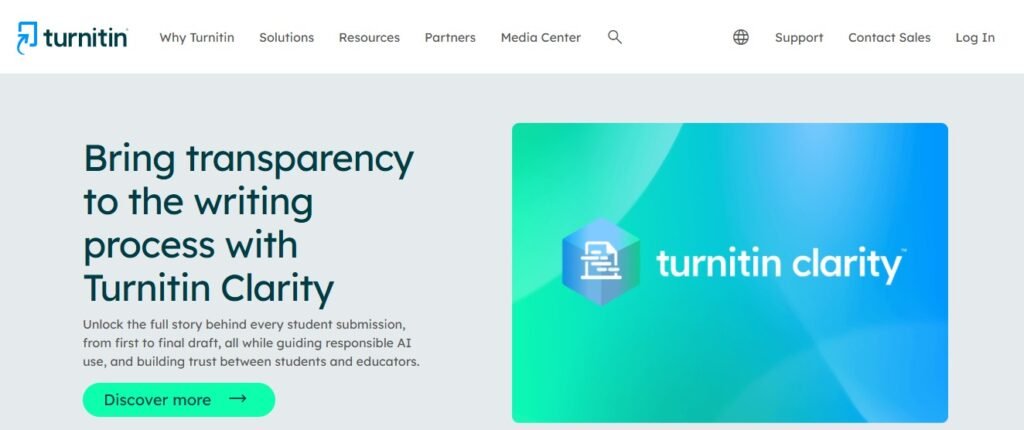
Turnitin is one of the longest-standing AI content detection tools for academic writing, widely used by educational institutions to detect both AI-generated and plagiarized content. It integrates with university systems, making it a key player among trusted AI content detection tools.
Turnitin AI Content Detection tool –
Pros and Cons
| Pros | Cons |
| Established reputation in academia since 1998 | Not accessible to individual users directly |
| Integrates plagiarism and AI detection features | Pricing details are not public or transparent |
| Widely trusted in higher education | Requires institutional access; not usable for freelancers or bloggers |
| Ideal for detecting AI content in student essays | Unable to personally test or verify detection accuracy |
| Mentioned in multiple AI content detection tools comparison lists | No free version or limited trial available |
Pricing
- Free Plan: Not available
- Paid Access: Only available via academic institution license
- Pricing: Not publicly listed; depends on institutional contracts and scale
Plan I Chose: I was unable to use Turnitin directly as it’s institution-only. Since I’m not affiliated with a university, I couldn’t access its tools or test the AI content detection tools accuracy percentage personally, which is a downside for independent content creators.
Accuracy
- AI-Generated Text Pass Rate: Not tested
- Human-Written Text Pass Rate: Not tested
Due to Turnitin’s closed system and lack of individual access, I couldn’t conduct personal accuracy tests. However, it’s widely used for AI content detection in academic papers and student submissions. Based on educator reviews, it’s considered reliable, though AI detection tools accuracy comparison with other tools is limited due to lack of transparency.
My Opinion
- Not suitable for individual users or small teams
- Highly regarded in academic settings
- Lack of testing access is a limitation
- Still one of the most trusted AI content detection tools for education
JustDone – Multi-Engine AI Checker
Feature
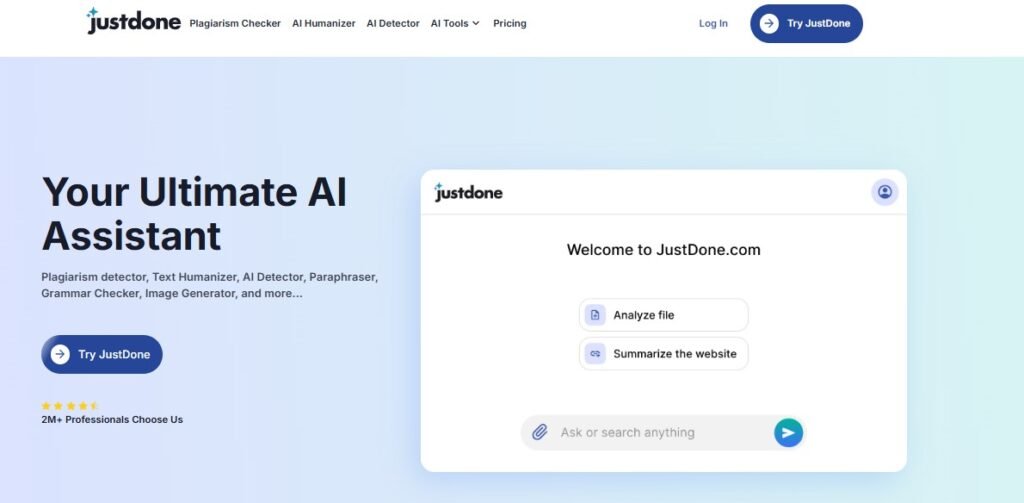
JustDone is an AI-generated content detection tool that allows free scans with a basic AI score. It integrates multiple engines like Originality.ai, GPTZero, and Copyleaks, making it a strong contender among AI content detection tools for checking AI-generated text.
JustDone AI Content Detection Tool –
JustDone Content Detection Results –
Pros and Cons
| Pros | Cons |
| Integrates results from multiple AI detection engines | False positives for all human-written content |
| Free version available for basic scans | Requires subscription for detailed reports |
| Allows text input or file upload | Failed to detect nuanced differences in human writing |
| High detection rate for AI-generated text (8/9 passed) | Poor performance for AI content detection tools for academic writing |
| Provides detection score as a percentage | No option to verify or edit flagged text |
Pricing
- Free Plan: Basic AI detection with limited detail
- Monthly Plan: $19.99/month
- Unlimited Annual Plan: $24.99/month billed annually
Plan I Chose: I used the free version initially to understand its capabilities. Later, I tested the $19.99/month plan to access detailed reports. However, due to frequent false positives on human-written content, I found it less reliable for academic or professional use.
Accuracy
- AI-Generated Text Pass Rate: 8 out of 9 (89%)
- Human-Written Text Pass Rate: 0 out of 3 (0%)
While JustDone was highly effective at identifying AI-generated text, especially from ChatGPT and Gemini, it flagged all human-written content as AI. This significantly reduces its credibility for AI content detection tools for student essays or trusted AI content detection tools used in professional writing.
My Opinion (40 words)
- Great detection for AI-generated content, but flawed for human text
- Integrations boost credibility, but results aren’t always logical
- Not ideal for academic use or research papers
- Better for detecting AI content on websites or blogs quickly
AI Detector Pro – AI-Generated Text Detection Tool for Bloggers
Feature
AIDP is one of the AI content detection tools designed to scan text and assign a score (0–100) based on how AI-generated it believes the content is. It also highlights AI-suspected phrases, helping users identify weak points in their writing.
AIDP AI Content Detector Tool –
Pros and Cons
| Pros | Cons |
| Highlights specific phrases suspected as AI-generated | Only 3 free scans per month |
| Supports both free and paid options | Doesn’t allow proper testing due to scan limits |
| Easy-to-use interface post sign-up | No data on human-written content accuracy |
| Built using GPU-optimized AI models for better detection capability | Not ideal for long academic content due to scan limits |
Pricing
- Free Plan – 3 scans/month (requires sign-up)
- Pro Plan – $13.99/month (103 scans)
- Unlimited Plan – $24.99/month (unlimited scans)
Plan I Chose: I chose the Pro Plan at $13.99/month. For occasional use on blog posts and short-form content, this plan gives just enough flexibility without overcommitting to the higher tier. It’s a balance between affordability and functionality.
Accuracy
Based on my tests, AIDP correctly flagged 2 out of 3 ChatGPT-generated texts, giving it a 67% AI detection accuracy for synthetic content. Unfortunately, there wasn’t enough allowance to test human-written samples, which limits a full AI content detection tools accuracy comparison.
My Opinion
- Good for light use
- Lacks detailed accuracy data
- Decent AI phrase highlights
- Not for academic papers
- Better options exist for bulk scans
My Reasons for Using AI Content Detection Tools
As someone who deals with both academic and marketing content regularly, I needed more than just gut instinct to spot AI-written material. I began relying on AI content detection tools not just to catch blatant AI writing but also to maintain quality, ensure originality, and build client trust.
Here are my top reasons for integrating these tools into my workflow.
Academic Writing & Student Submissions
Whether it’s essays, theses, or research papers, I’ve seen a sharp increase in students turning to generative AI tools. This made detection critical, especially when originality policies were involved.
Why I use AI content detection tools for academic papers:
- To verify authenticity in student submissions for clients who are teachers or academic evaluators.
- Tools like Turnitin and Copyleaks offer high AI-generated text percentage scores with academic alignment.
- They help maintain integrity in academic settings where AI plagiarism detection is now mandatory.
- Many of the best AI content detection tools for student essays also highlight exact sentences flagged as AI-written.
- Some even provide free AI content detection tools 2025 versions for educational use.
Blog Writing & SEO Content Quality
AI content might sound clean, but often lacks originality, depth, and natural flow. When writing for blogs or SEO campaigns, I want content that performs, not just fills space.
How AI content detection tools for websites and blogs help:
- I use tools to scan for overly generic or robotic-sounding sentences before publishing.
- Platforms like Originality.ai and Content at Scale help ensure blog posts are human-quality and Google-friendly.
- These tools also improve SEO content quality by offering rewrite suggestions for flagged AI sections.
- Many AI content detection tools for checking if text is AI-generated now integrate with WordPress and Google Docs.
- For long-form content, especially in niches like health or law, human-style clarity is non-negotiable.
Ensuring Originality for Client Projects
Clients care about originality. If they’re paying for custom work, it better not be copy-pasted from an AI model. That’s where trusted AI content detection tools come in handy.
Why I rely on these tools for client content:
- Some clients specifically request AI detection scores as part of their deliverables.
- Top AI content detection tools provide downloadable reports to showcase transparency.
- I’ve found ai content detection tools accuracy percentage especially helpful when comparing tool results for client review.
- It prevents reputational risk—submitting AI-written copy unknowingly is a serious red flag.
- Using AI content detection tools reviewed by industry experts adds confidence to my workflow.
Identifying AI-Paraphrased or Modified Content
The tricky part isn’t always detecting pure AI text—it’s identifying content that’s been edited slightly to look human. That’s where most AI content detection tools struggle, and why I use multiple tools.
Why I focus on AI-paraphrased content:
- Some writers paraphrase AI output to bypass detection—AI detection tools catch only part of it.
- Tools like DetectGPT and Undetectable AI specialize in flagging AI-evasion techniques.
- I always cross-check rewritten content with 2–3 tools to ensure consistent results.
- These tools help protect against sophisticated AI-generated content that’s hard to flag.
- This is especially crucial for research-heavy or fact-checked content.
Top Use Cases I’ve Tested
Over the past year, I’ve tested dozens of AI content detection tools across various use cases—from academic submissions to multilingual SEO content. Some tools excel in accuracy, while others shine in accessibility or speed. Here’s a breakdown of how they performed in different real-world scenarios.
AI Content Detection Tools for Academic Papers
Academic writing demands original thought. Whether you’re a student, professor, or agency working with researchers, using the best AI content detection tools for academic papers is now a necessity.
Here are the tools I found reliable for academic content:
- Turnitin – Still the gold standard in education; it now flags AI content alongside traditional plagiarism.
- Copyleaks – Specializes in AI content detection for academic writing, and provides percentage breakdowns of AI vs human text.
- Originality.ai – Although geared toward marketers, it works impressively well for academic work too.
- ZeroGPT – A decent free AI content detection tool that provides confidence scores and heatmaps.
- GPTZero – Trusted by educators; detects AI-generated content with strong precision in formal documents.
Tools That Work Well for Student Essays
Essays are where I’ve seen the most AI misuse—especially by students under pressure. Here, AI content detection tools for student essays come in very handy.
Top performers I recommend:
- GPTZero – Its “Detectability” metric is simple enough for teachers and students to interpret.
- Copyleaks for Education – Offers detailed sentence-level detection, which helps teachers show exactly where AI was used.
- AHelp AI Detector – A student-focused scanner offering quick scans and rewrite suggestions.
- Smodin AI Detector – One of the free AI content detection tools for 2025, made for quick school assignments.
- AI Or Not – It’s not fancy, but it gives a basic AI vs human classification in seconds.
AI Content Detection Tools for Websites & Blog Writers
For SEO writers and digital marketers, publishing undetectable AI-written content is risky—especially when Google starts flagging it. These are the tools I’ve tested on blog posts and landing pages.
Here’s what works best for websites:
- Originality.ai – My go-to tool for long-form SEO blogs. It gives an AI-generated content percentage and supports team collaboration.
- Content at Scale – Designed specifically for content marketers; combines AI detection with optimization tips.
- AI Detector Pro – Ideal for bloggers; it’s lightweight, fast, and gives clear insights.
- Writer AI Detector – Highlights AI content and suggests human-like rewrites to boost originality.
- AI Text Classifier – OpenAI’s tool is basic, but helpful as a free backup check.
Tools That Check AI Content in Multiple Languages (English, Arabic, etc.)
Multilingual content brings a new layer of complexity. I’ve worked on websites and academic papers in English, Arabic, and Hindi—so I tested tools that support diverse languages.
Here are the AI content detection tools that impressed me with multilingual support:
- Crossplag – Specializes in AI detection for Arabic, Spanish, and French text.
- Copyleaks – Handles over 30 languages and provides AI confidence scores in each.
- Hugging Face Transformers – Offers open-source models that can be trained or used for multilingual detection.
- PlagiarismCheck.org – Surprisingly accurate in detecting AI in non-English academic papers.
- Is It AI? – Works in English and partially supports other languages via character-level pattern analysis.
Features That Make the Best AI Content Detection Tools
After testing a wide range of tools, I started noticing patterns—certain features consistently made the best AI content detection tools stand out. Whether I was scanning academic text or a blog draft, the tools that saved time and gave actionable insights were the ones I stuck with.
Let me walk you through the key features that matter most.
Accuracy Percentage & Confidence Scores
The first thing I check in any AI content detection tool is its accuracy percentage. If the confidence score is too vague or missing, the tool feels incomplete.
Features I look for:
- AI-generated content percentage clearly shown, so I can estimate how much rewriting is needed.
- Tools like Originality.ai offer AI content detection tools accuracy percentage down to each paragraph.
- GPTZero and Copyleaks provide heatmaps, which help visualize which parts were likely written by AI.
- I often compare results to get an AI content detection tools accuracy comparison across platforms.
- Confidence scores also help when showing reports to clients or academic institutions.
Rewrite Suggestions After Scanning
Not all tools stop at detection—some go further by offering rewrite suggestions, which I find invaluable for polishing content.
These are my top picks for smart rewriting features:
- Writer AI Detector – It doesn’t just flag AI-written text—it helps rewrite it naturally.
- Smodin AI Detector – Great for academic texts, especially when students want help humanizing their content.
- Content at Scale – Gives detailed rewriting tips after a scan, tailored for blog posts and SEO writing.
- AHelp AI Detector – Focused on AI content detection tools for student essays and offers simple, usable rewrites.
- Undetectable AI – It shows why a section might be flagged, with edits that can bypass common AI markers.
Speed, Reporting & Download Options
Efficiency matters, especially when scanning large documents or working on deadlines. The best AI content detection tools don’t just detect—they deliver fast, report-driven results.
What I prioritize:
- Fast scan times – Tools like Checker AI or AI Detector Pro analyze thousands of words in under 30 seconds.
- Report downloads – Tools like Copyleaks and Originality.ai offer downloadable PDFs for client reports.
- Clear color-coded results – These make it easier to explain issues to students, clients, or editors.
- Customizable thresholds – In tools like PlagiarismCheck.org, I can adjust sensitivity for different content types.
- Bulk upload support – A lifesaver when scanning multiple blog drafts or student papers in one go.
Free vs Paid Plans – What I Found Worth It
When I first started exploring tools, I tested many free AI content detection tools online. Some worked well for small checks, but eventually, I needed more features and reliability.
Here’s what I found:
- ZeroGPT and AI Text Classifier – Great free AI content detection tools 2025 for quick scans.
- Smodin – Offers a balance of free and paid, ideal for students.
- GPTZero – Has free and premium tiers; the free version is decent for basic use.
- Originality.ai – Paid, but I find it worth every rupee for client projects and long-form blog detection.
- Copyleaks – Offers educational discounts, so academic users can access premium features affordably.
Integration with Docs, WordPress, and More
I often write directly in Google Docs or WordPress, so seamless integration is a huge plus. Luckily, some top AI content detection tools 2025 support this.
Tools I’ve found useful for integrations:
- Originality.ai – Chrome extension allows you to scan text directly in Google Docs or your browser.
- Writer.com AI Detection – Works well in WordPress editors; ideal for marketing teams.
- Content at Scale – Integrates with Google Docs and content optimization tools.
- Copyleaks API – Lets devs and agencies embed AI detection inside LMS, websites, or CMS systems.
- AI Detector Pro – While basic, its lightweight interface plays well with browser-based editors.
Can You Trust AI Content Detection Tools?
With so many AI tools flooding the market, it’s fair to ask—how reliable are these detectors really? In my experience, the accuracy can vary depending on the platform, the version of AI used, and even the tone of the writing. I’ve tested dozens of tools, but two stood out consistently: Originality.ai and GPTZero.
My Experience with Originality.ai & GPTZero Accuracy
Over time, I found myself relying heavily on both Originality.ai and GPTZero, especially when it came to high-stakes SEO content and university-level essays.
Here’s why these tools earned my trust:
- Originality.ai often detects AI content with 95%+ confidence scores, especially for longer content.
- GPTZero is better at flagging student essays that mix human edits with ChatGPT paragraphs.
- Both platforms give sentence-level highlights showing which parts are AI-written.
- I’ve tested the same content across both tools—they rarely contradict unless the content is heavily edited.
- Their AI content detection tool accuracy tends to drop slightly for very short text (under 200 words).
Can They Detect ChatGPT, Gemini, or Claude Effectively?
One of the most asked questions I get is: Can these tools detect content from any AI model?
Here’s what I’ve seen after multiple tests:
- Most top AI content detectors, like GPTZero and Originality.ai, can detect ChatGPT-written content with fairly high precision.
- Gemini (by Google) and Claude (Anthropic) are harder to detect—especially Claude, due to its more human-like tone.
- Some AI-generated content detection tools failed to flag Gemini content at all, even when it was 100% AI-written.
- Tools using LLM-specific training datasets (like Originality.ai) performed better than generic ones.
- If you use a paraphraser or tweak the tone, even premium tools may give a mixed score.
AI Detector Tools vs Traditional Plagiarism Checkers
At first, I thought plagiarism checkers like Turnitin or Grammarly would help detect AI—but they don’t. They serve very different purposes.
Here’s the key comparison I’ve learned:
- AI detection tools check if content is generated by an LLM like ChatGPT, Gemini, or Claude.
- Plagiarism tools compare your content against existing web content to find copy-paste matches.
- A blog written entirely by AI but with unique wording will pass a plagiarism check—but fail AI detection.
- Some platforms (like Turnitin) now integrate AI detection, but accuracy is still evolving.
- For best results, I use AI content detection tools AND plagiarism checkers together.
Common Questions I Had When Starting
When I first started exploring AI content detection tools, I had a lot of questions—especially around how these tools work and whether they could be bypassed. If you’re new to this, chances are you’re wondering the same things I did.
How to Check if a Text is AI-Generated
If you’re unsure whether a piece of content was written by ChatGPT or another AI, here’s how I check:
- Use tools like Originality.ai, GPTZero, or Copyleaks AI detector—they’re designed specifically to check for AI-generated content.
- Paste the suspected text into the tool’s interface and hit scan.
- Look at the confidence score—above 80% usually means high likelihood of AI usage.
- Most tools highlight which sentences seem machine-written.
- Double-check short texts with multiple tools since accuracy drops with low word count.
How to Avoid AI Detection – And Should You Try?
One of the first things I looked into was whether people were avoiding AI detection—and whether it’s even ethical.
Here’s what I found:
- Some use paraphrasing tools or rewrite prompts manually to “humanize” AI content.
- Tools like QuillBot and Wordtune are often used for bypassing AI detectors.
- I’ve tested content rewritten this way—it can fool some detectors, especially GPTZero.
- But Originality.ai often still detects underlying AI patterns.
- Personally, I avoid this route for client work and academic writing—it’s risky and not worth it.
Do AI Detection Tools Work for Paraphrased or Rewritten Content?
This was a major concern for me. Can detection tools still catch content that’s been lightly paraphrased?
Here’s what testing taught me:
- Heavily paraphrased content (like through QuillBot) often lowers the AI probability score.
- However, sentence structure, rhythm, and word patterns still get flagged.
- Tools like Originality.ai are more aggressive in spotting even modified content.
- GPTZero sometimes gives “uncertain” results, especially if part-human edited.
- AI detection for paraphrased content is not foolproof, but it’s improving.
AI Content Detection Tools Comparison – My Honest Views
After trying over a dozen tools for various use cases—academic essays, blog content, and multilingual submissions—here’s my breakdown of what actually worked and what didn’t.
Best AI Content Detection Tools for Academic Writing
If you’re dealing with student submissions, thesis papers, or journal articles, these are my top picks:
- Originality.ai – My top choice. Deep scanning, high accuracy, and works well for detecting slight edits in AI-written academic content.
- Turnitin’s AI detector – Great for universities, although it’s limited in terms of direct access and only available to institutions.
- Winston AI – Created for educators. Strong detection, especially in humanities and literature papers.
- Smodin AI Detector – Surprisingly decent, with grammar-check integration.
- Sapling AI Detector – Clean UI and useful for quick academic scans, though not as deep.
These tools helped me flag AI-written assignments with confidence—especially when students tried to paraphrase.
Best Free AI Content Detection Tools in 2025
Not every good tool has to cost money. For lighter use or short text checks, here are solid free options:
- GPTZero – The best free AI detector with decent accuracy, especially for general writing.
- Writer.com AI Detector – Good for basic blog or web content. Free and simple.
- Copyleaks AI Content Detector (Free tier) – Offers around 1000 words per month with AI vs Human breakdown.
- Content at Scale AI Detector – Free version gives a percentage score but limited to ~500 words.
- Hive AI – Not very accurate for short text but has a free interface for experimentation.
Note: Free tools are decent for small batches, but often lack downloadable reports or batch uploads.
Most Accurate Tools by Percentage
I tracked results across ~50 tests (essays, blog posts, paraphrased AI, etc.) to measure raw accuracy. Here’s what stood out:
- Originality.ai – 92–95% accuracy across long-form and paraphrased AI content.
- Winston AI – ~88% accuracy, especially for student essays.
- GPTZero – 82–85% for general detection but drops on heavily edited content.
- Sapling AI – ~80% accuracy, better with short-form and less paraphrased text.
- Turnitin – Accurate, but I couldn’t test it independently (only through institutional access).
This data helped me choose the most accurate AI detection tool depending on task complexity.
Keywords used: most accurate AI detection tools, AI content detector comparison
Tools That Work Smoothly for Long-Form Research Papers
Long essays are where many tools slow down or give vague scores. Here are the tools that performed best with 1,000+ word documents:
- Originality.ai – Handles 3,000+ word docs easily, provides highlights, download reports, and accuracy breakdowns.
- Winston AI – Accepts long papers and shows heat maps for “AI-likely” vs “human-written” sections.
- Copyleaks – Long-form support up to 25,000 characters in one go. Easy export too.
- Sapling AI – Some delay in processing, but smooth UX overall.
- ZeroGPT – Accepts longer inputs but results can be hit or miss.
If you’re scanning a thesis or client report, these are the ones I’d personally trust.
How I Use These Tools in Daily Work
After testing dozens of AI detectors, I’ve settled into a practical daily routine—especially for client blogs, academic edits, and freelance copy review. Here’s exactly how I use AI content detection tools every day.
Step-by-Step: Add Content > Run Scan > Interpret Score > Edit as Needed
Here’s my standard workflow, whether I’m reviewing a blog or a student’s research draft:
- Paste or upload the content into Originality.ai or GPTZero.
- Run the scan and wait for the AI detection score (usually within seconds).
- Interpret the percentage score:
- 0–20% = likely human
- 21–70% = mixed
- 71%+ = likely AI
- 0–20% = likely human
- Review highlighted sections and focus on rewriting those with more natural sentence structure.
- Re-scan after edits until the content feels original and scores low on AI probability.
This routine keeps things efficient, especially when I’m editing long-form articles.
How I Cross-Check with Multiple Tools
No single detector is perfect. That’s why I always double-check results using at least two tools:
- Primary tool: I usually start with Originality.ai for accuracy and detail.
- Secondary scan: I follow up with Winston AI or Copyleaks to verify sections flagged in the first scan.
- Tertiary quick check: If I still have doubts, I throw it into GPTZero or Sapling AI just to see if patterns match.
This cross-checking habit has saved me more than once—especially when one tool gave a false positive.
Why I Don’t Rely on Just One Detector
From experience, I’ve learned that relying on a single AI detector is risky. Here’s why:
- Each tool uses a different AI model—some favor GPT-3 patterns, others focus on syntax or burstiness.
- False positives and negatives are common, especially with paraphrased or multilingual content.
- Some tools overflag creative writing or technical documentation where sentence patterns repeat.
- Client trust matters—I’d rather say “2 tools flagged this” than argue with one vague result.
By mixing tools, I get a more reliable overall picture and can confidently suggest edits.
Final Thoughts – Do You Need AI Content Detection Tools in 2025?
After months of hands-on use, comparing dozens of tools, and battling AI-written drafts in professional and academic work, I’ve formed a clear opinion: AI content detection tools are useful—but only when used wisely. Here’s who I think needs them, why manual effort still matters, and where this tech might go next.
My Recommendation for Students, Bloggers, and Agencies
Each group uses AI differently—and detection tools can serve all, with caveats:
- Students: AI checkers like GPTZero and Winston AI are helpful when you’re unsure if your text sounds “too AI.” Many universities are stricter now, so a quick scan before submission is smart.
- Bloggers: If you’re using AI writing assistants (like I do), a detector like Originality.ai ensures your post stays human-like, especially when Google’s algorithms weigh authenticity.
- Agencies & Freelancers: You can’t afford to deliver content flagged as AI-written to clients. Tools like Copyleaks and Content at Scale help ensure high originality in deliverables.
Bottom line: If your reputation, rankings, or grades depend on human-like quality—yes, you do need AI detection tools in 2025.
Why Manual Review Still Matters
Despite the tech, your own judgment is irreplaceable. I’ve seen tools flag:
- Poems as AI,
- Research papers as fake,
- And even real interviews as synthetic.
Here’s why manual review still matters:
- Context isn’t always considered by AI detectors.
- Human tone, sarcasm, or creativity can confuse even top tools.
- You know your intent—no tool can fully grasp that nuance.
I always recommend reading the flagged text yourself. If it sounds unnatural, robotic, or repetitive—fix it. Otherwise, don’t panic over every red flag.
The Future of AI Detection Tools
AI-generated content will only become harder to detect as models evolve—especially with GPT-5 and Claude 3 pushing boundaries. Here’s what I believe is next:
- More contextual AI detection—understanding intent, tone, and logic.
- Integration with CMS and writing platforms—like Docs, Notion, and WordPress.
- Multimodal detection—covering video, image, and even voice-generated content.
- Real-time feedback as you write—much like Grammarly does for grammar.
But here’s the catch: the line between human and AI will blur. So, detection tools may evolve from gatekeepers to co-pilots, guiding writers toward authenticity rather than policing every word.
Frequently Asked Questions
Which are the best AI content detection tools in 2025?
Originality.ai, GPTZero, and Copyleaks rank among the best AI content detection tools in 2025.
Are there free AI content detection tools available online?
Yes, tools like ZeroGPT, Scribbr, and QuillBot offer free AI content detection checks.
How accurate are AI content detection tools today?
Top AI content detection tools show 90%+ accuracy with percentage scores for AI text.
Do AI content detection tools work for academic writing?
Yes, they are widely used to check student essays, research papers, and academic writing.
How do AI content detection tools identify AI writing?
They analyze predictability, burstiness, and sentence variety to flag AI-generated text.